Cancer Nanomedicine: Advanced Nanocarrier Systems, Targeted Drug Delivery, Theranostics, and Emerging Strategies for Precision Oncology
DOI:
https://doi.org/10.64062/JPGMB.Vol2.Issue4.2Keywords:
- Cancer Nanomedicine; Nanoparticles; Targeted Drug Delivery; Smart Nanocarriers; Theranostics; Immuno-Nanomedicine; Gene Delivery; RNA Therapeutics; Precision Oncology; Tumor Microenvironment; Drug Delivery Systems; Cancer Therapy.
Abstract
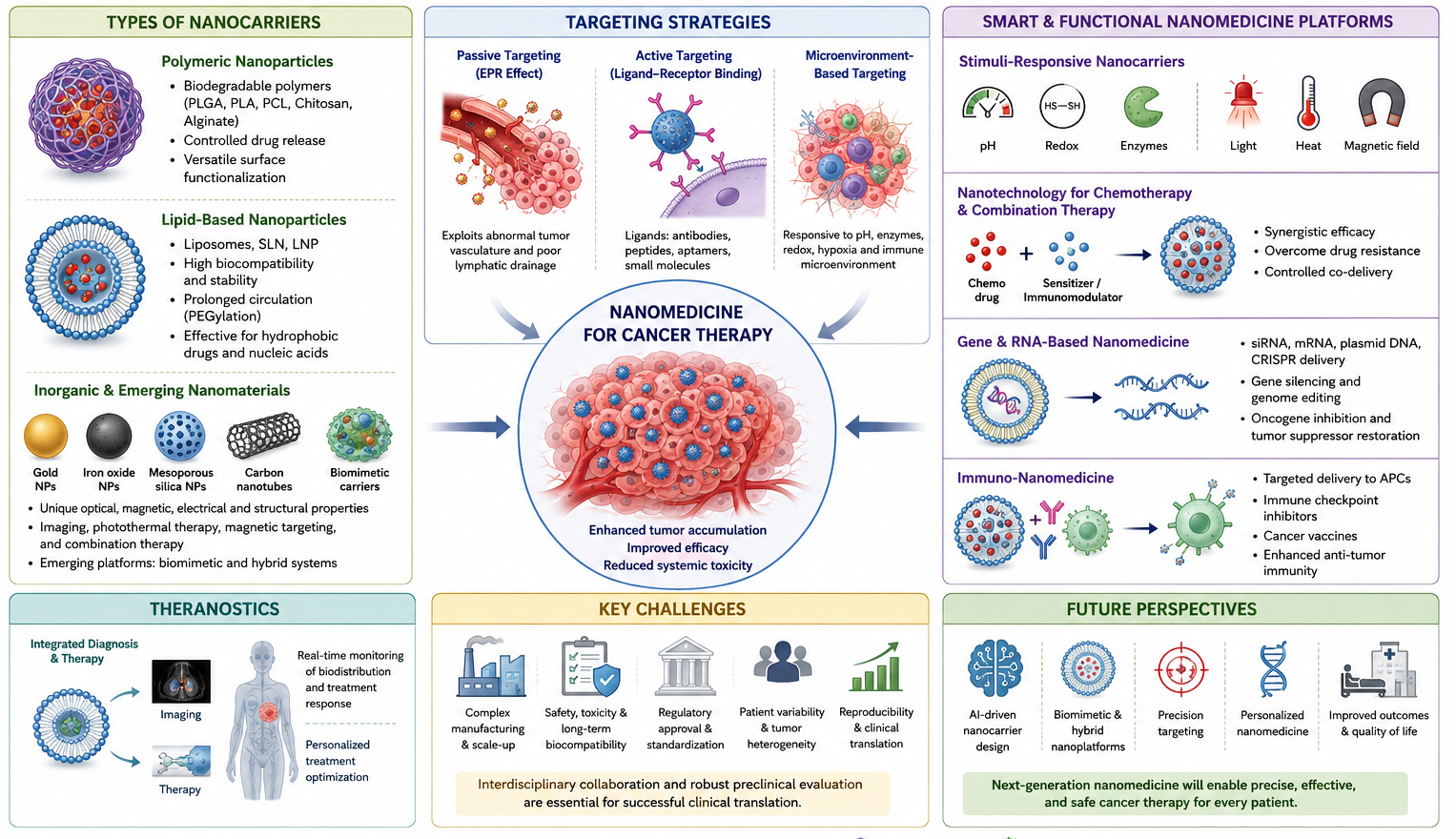
Cancer remains one of the leading causes of morbidity and mortality worldwide despite substantial advances in diagnosis and treatment. Conventional therapeutic approaches, including chemotherapy, radiotherapy, surgery, and immunotherapy, are often limited by poor tumor selectivity, systemic toxicity, multidrug resistance, and inadequate drug accumulation at the disease site. Nanomedicine has emerged as a transformative strategy in oncology, offering innovative solutions for targeted drug delivery, improved pharmacokinetics, enhanced therapeutic efficacy, and reduced off-target toxicity. Owing to their unique physicochemical properties, nanoparticles can be engineered to overcome biological barriers associated with tumor progression and facilitate precise delivery of therapeutic and diagnostic agents. This review comprehensively discusses the fundamental principles of cancer nanomedicine, including tumor biology, barriers to drug delivery, and critical design considerations for nanocarrier development. Various classes of nanomaterials, including polymeric nanoparticles, lipid-based systems, inorganic nanomaterials, and emerging biomimetic platforms, are examined with respect to their structural characteristics, therapeutic applications, and translational potential. Particular emphasis is placed on tumor-targeting strategies, encompassing passive, active, and microenvironment-responsive approaches, as well as on the development of smart stimuli-responsive nanocarriers capable of controlled, site-specific drug release. Furthermore, recent advances in nanotechnology-enabled chemotherapy, combination therapy, gene and RNA delivery, immuno-nanomedicine, and theranostic platforms are highlighted. The integration of diagnostic imaging and therapeutic functions within multifunctional nanocarriers has enabled real-time monitoring of treatment response and personalized cancer management. In addition, challenges associated with safety, toxicity, large-scale manufacturing, regulatory approval, and clinical translation are critically evaluated. Emerging innovations, including artificial intelligence-driven nanocarrier design, biomimetic nanomedicines, and precision oncology approaches, are also explored as future directions for the field.Overall, cancer nanomedicine has evolved from a simple drug-delivery concept into a multifunctional therapeutic platform integrating targeted therapy, molecular imaging, immunomodulation, gene therapy, and personalized medicine. Continued interdisciplinary collaboration and technological innovation are expected to accelerate the clinical translation of next-generation nanomedicines, ultimately improving treatment outcomes and advancing precision cancer care.
References