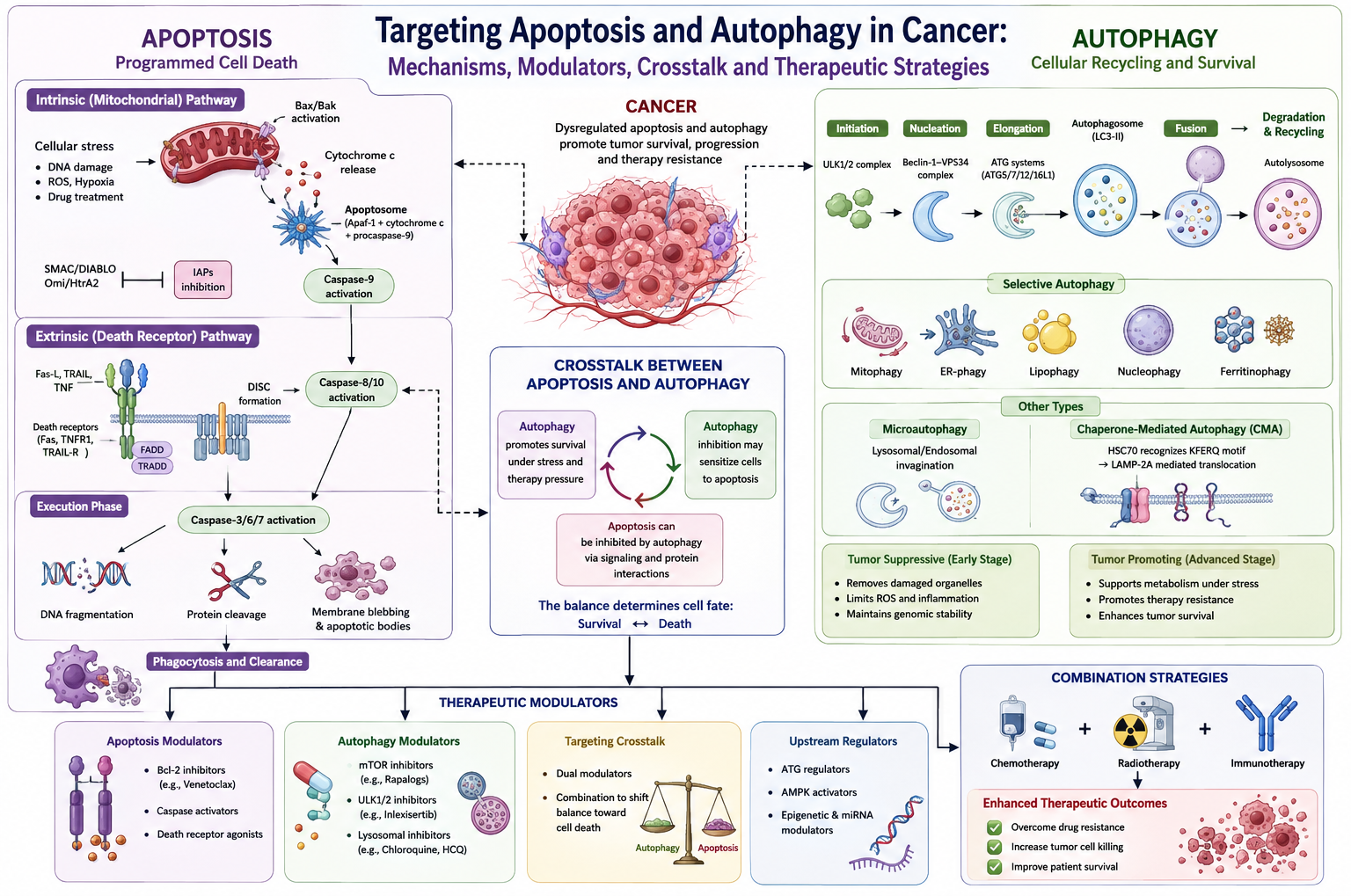
Targeting Apoptosis and Autophagy in Cancer: Molecular Mechanisms, Therapeutic Modulators, Clinical Advances, and Future Perspectives
DOI:
https://doi.org/10.64062/JPGMB.Vol2.Issue4.1Keywords:
- Apoptosis, Autophagy, Modulators, Carcinogenesis, Cancer Therapeutics
Abstract
Cancer is a leading cause of mortality globally. Apoptosis, a highly selective and natural mechanism of programmed cell death, and autophagy, a physiological state at the cellular level that eliminates misfolded proteins and aberrant organelles, are both related. Apoptotic cell death occurs through caspase activation, DNA and protein degradation, and phagocytosis. That is why apoptosis, particularly modulators, is a lucrative target for the development of anticancer drugs due to the intrinsic and extrinsic pathways. Overexpression of antiapoptotic proteins and underexpression of proapoptotic proteins are two standard mechanisms by which cancer cells inhibit apoptosis. However, autophagy is activated through the process of autophagosomes, where autophagic modulators play a dual role, both in promoting and suppressing tumor progression. The therapeutic potential of modulators, including autophagy-related gene (ATG) regulators, mTOR inhibitors, caspase activators, and Bcl-2 inhibitors, is currently being investigated. A promising strategy for overcoming medication resistance and improving treatment outcomes is to combine apoptosis and autophagy modulators with immunotherapy, radiotherapy, or chemotherapy. In this paper, we will discuss the mechanisms of apoptosis and autophagy, including their modulators in carcinogenesis, their crosstalk in cancerous cells, and their roles in cancer treatment.
References