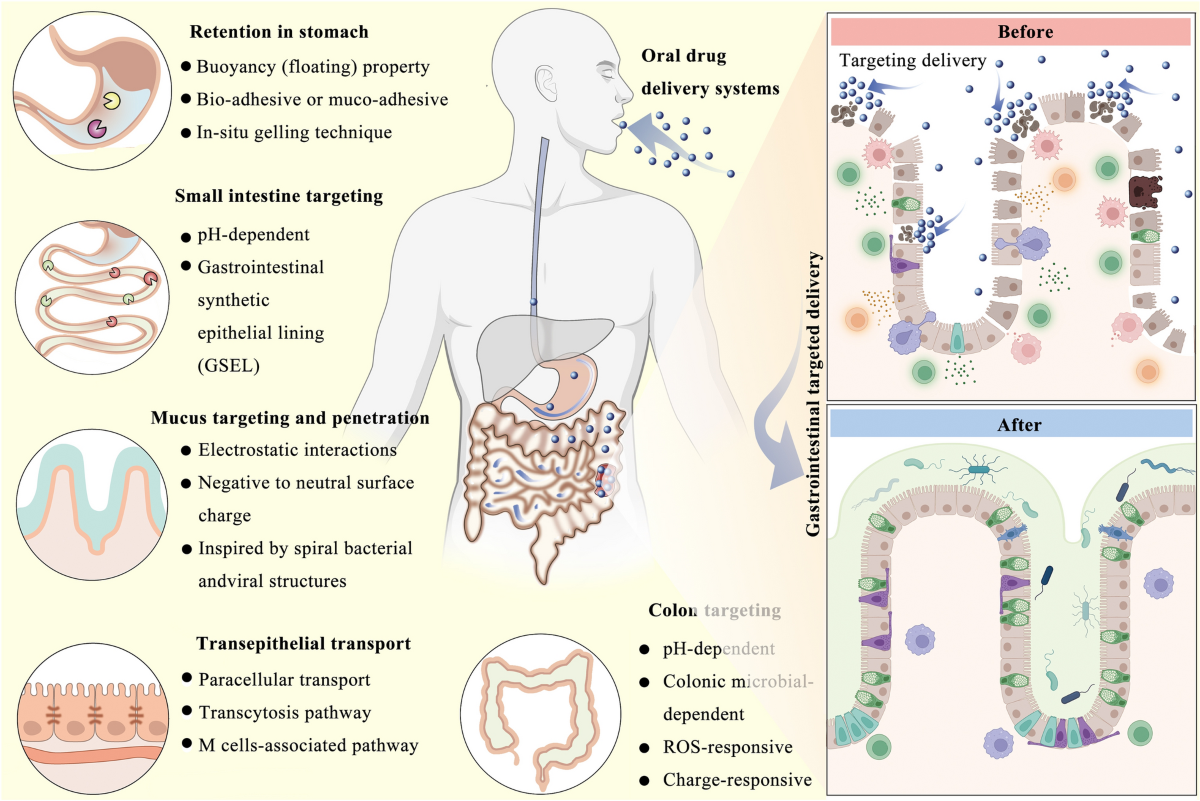
Gastroretentive Floating Microspheres: A Promising Approach for Site-Specific and Controlled Drug Delivery.
DOI:
https://doi.org/10.64062/JPGMB.Vol2.Issue2.7Keywords:
- Gastroretentive drug delivery, Floating microspheres, Controlled drug release, Site-specific delivery, Gastric retention, Oral drug delivery system
Abstract
Gastroretentive drug delivery systems (GRDDS) have drawn a lot of interest as a successful method for increasing the oral bioavailability of medications that act locally in the stomach, have a limited absorption window, or are unstable in the intestinal environment. Among the several GRDDS, gastroretentive floating microspheres are a promising multi-unit system that offers site-specific and controlled drug release while extending the stomach residence period. Because of their low density and ability to float on stomach contents for prolonged periods of time without interfering with gastric emptying, these microspheres enhance patient compliance and therapeutic effectiveness. Polymers, such as natural, semi-synthetic, or synthetic polymers, and gas-forming agents are commonly used in the formulation of floating microspheres utilizing methods such solvent evaporation, emulsion solvent diffusion, spray drying, and ionic gelation. To get the best buoyancy, drug entrapment efficiency, and sustained drug release profiles, it is essential to choose the right polymers and formulation parameters. Micromeritic characteristics, in vitro buoyancy, drug release kinetics, stability tests, and in vivo stomach retention evaluation are all part of the evaluation of floating microspheres.
References