Lipid-Based Nanocarriers in Drug Delivery: Pharmacokinetic Modulation and Clinical Perspectives
DOI:
https://doi.org/10.64062/JPGMB.Vol2.Issue2.3Keywords:
- Lipid-based nanocarriers, pharmacokinetics, bioavailability, drug delivery, clinical translation, nanomedicine
Abstract
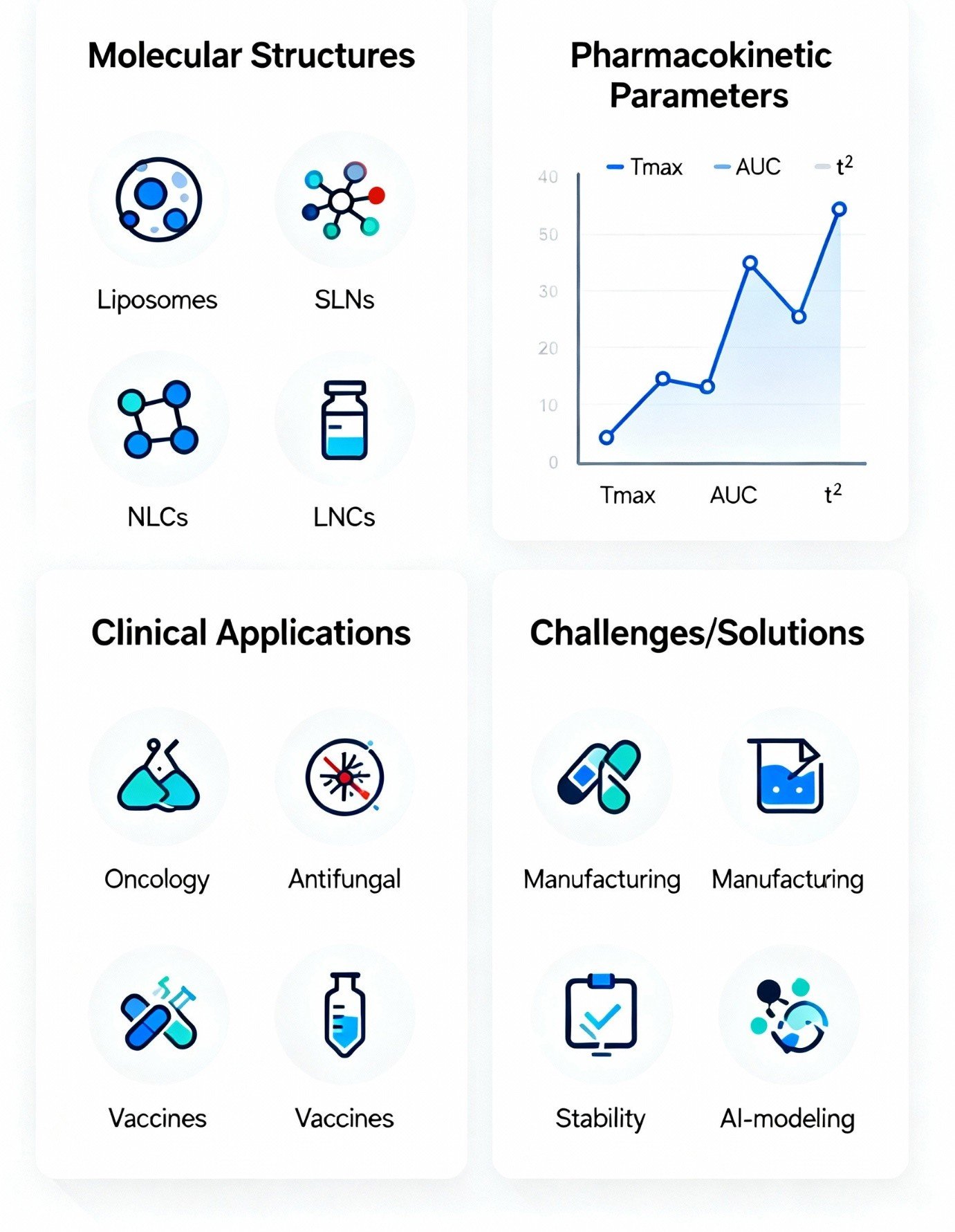
Lipid-based nanocarriers (LNCs) have emerged as a cornerstone in modern drug delivery, offering innovative solutions to the limitations of conventional formulations such as poor solubility, low stability, and limited bioavailability. Comprising biocompatible lipids like phospholipids, triglycerides, and cholesterol, these nanocarriers—encompassing liposomes, solid lipid nanoparticles (SLNs), nanostructured lipid carriers (NLCs), and lipid nanocapsules (LNCs)—enable precise control over drug release and targeted delivery. Their unique composition facilitates enhanced drug solubilization, protection from enzymatic degradation, and improved absorption through lymphatic transport and membrane fusion mechanisms. By modulating key pharmacokinetic parameters such as maximum plasma concentration (Cmax), time to reach peak concentration (Tmax), area under the curve (AUC), and half-life (t½), LNCs significantly improve systemic exposure and therapeutic efficacy. Clinically, lipid nanocarriers have demonstrated transformative outcomes in oncology (Doxil®, Onivyde®), antifungal therapy (AmBisome®, Fungisome®), and vaccine technology (mRNA–LNP platforms for COVID-19), highlighting their translational success. Despite existing challenges in large-scale manufacturing, stability, and regulatory approval, continuous advancements—especially the integration of AI-driven pharmacokinetic modeling and stimuli-resp
References