Hybrid Nanocomposites in Pharmacology: Multifunctional Platforms for Cancer and Inflammatory Disorders
DOI:
https://doi.org/10.64062/JPGMB.Vol2.Issue2.2Keywords:
- Hybrid Nanocomposites; Multifunctional Drug Delivery; Cancer Therapy; Inflammatory Disorders; Stimuli-Responsive Systems; Theranostics; Nanomedicine; Combination Therapy; Pharmacokinetics; Precision Medicine
Abstract
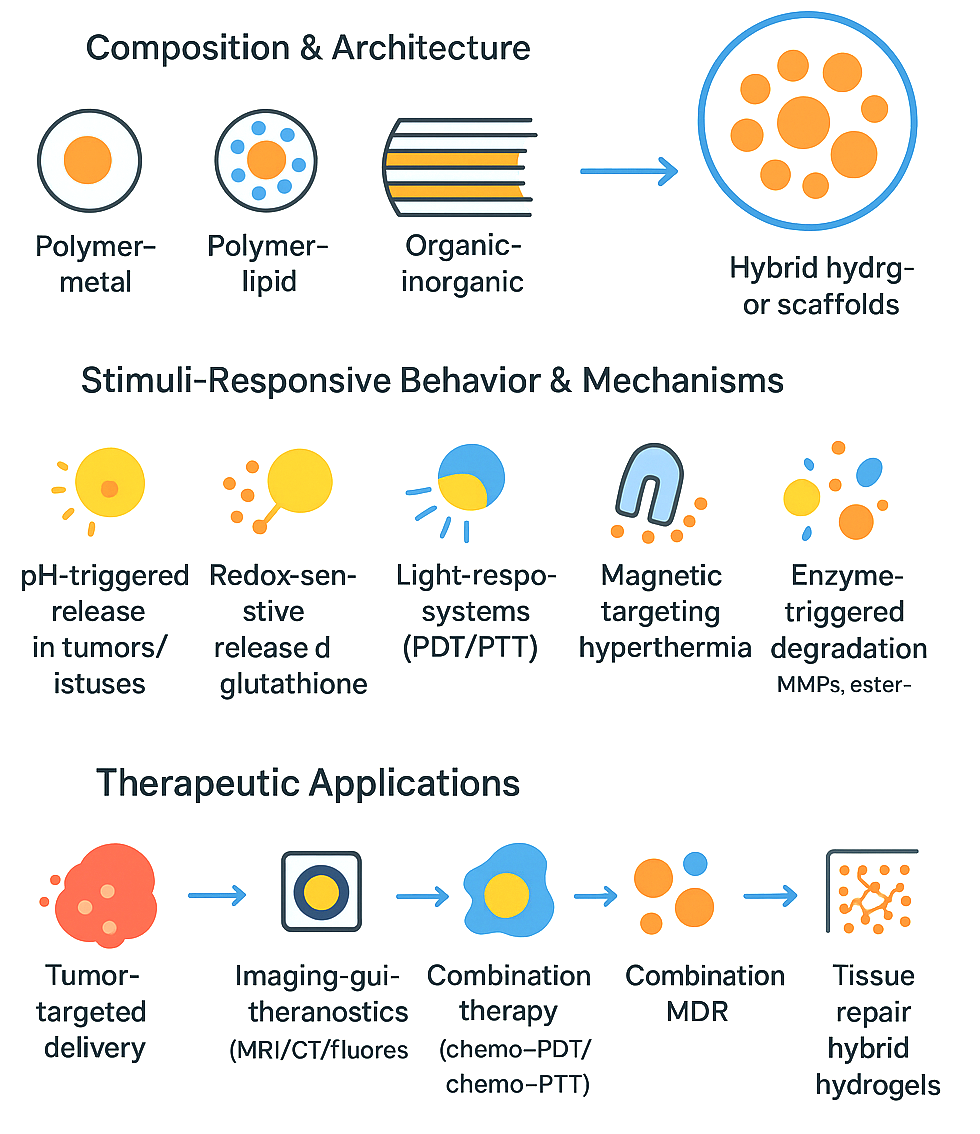
Hybrid nanocomposites have emerged as one of the most versatile and multifunctional platforms in modern pharmacology, offering unique opportunities to tackle the complex pathophysiology of cancer and inflammatory disorders. By integrating two or more organic, inorganic, polymeric, lipidic, or biological components into a single nanosystem, hybrid nanocomposites enable synergistic enhancements in drug loading, targeting precision, responsiveness to physiological stimuli, and therapeutic efficacy. Their ability to combine structural stability with dynamic functional properties makes them especially valuable in overcoming traditional treatment barriers such as multidrug resistance, uncontrolled inflammation, off-target toxicity, and limited bioavailability. Recent advancements in fabrication techniques—including chemical synthesis, microfluidic engineering, physical assembly methods, and green bioinspired strategies—have further expanded the design flexibility and clinical potential of these nanoplatforms. Hybrid nanocomposites are now being explored for targeted drug delivery, multimodal combination therapy, imaging-guided theranostics, immunomodulation, antioxidative therapy, and tissue regeneration. Despite their promise, challenges related to large-scale manufacturing, reproducibility, regulatory validation, and long-term safety still impede clinical translation. This review provides a comprehensive overview of the fundamentals, fabrication strategies, therapeutic applications, pharmacokinetics, and future opportunities of hybrid nanocomposites, emphasizing their transformative potential in next-generation cancer and inflammation management.
References