Gene-Editing and Drug Delivery Convergence: Pharmaceutical Strategies for Precision Gene Therapy
DOI:
https://doi.org/10.64062/JPGMB.Vol2.Issue2.1Keywords:
- Gene Editing, CRISPR/Cas, Talens, Zinc-Finger Nucleases, Gene Delivery Vectors, Viral Vectors, Non-Viral Vectors, Biomimetic Nanoparticles, Intracellular Trafficking, Controlled Release, Off-Target Effects, Immunogenicity, Pharmacokinetics, Personalized Medicine, Precision Gene Therapy, AI-Driven Optimization
Abstract
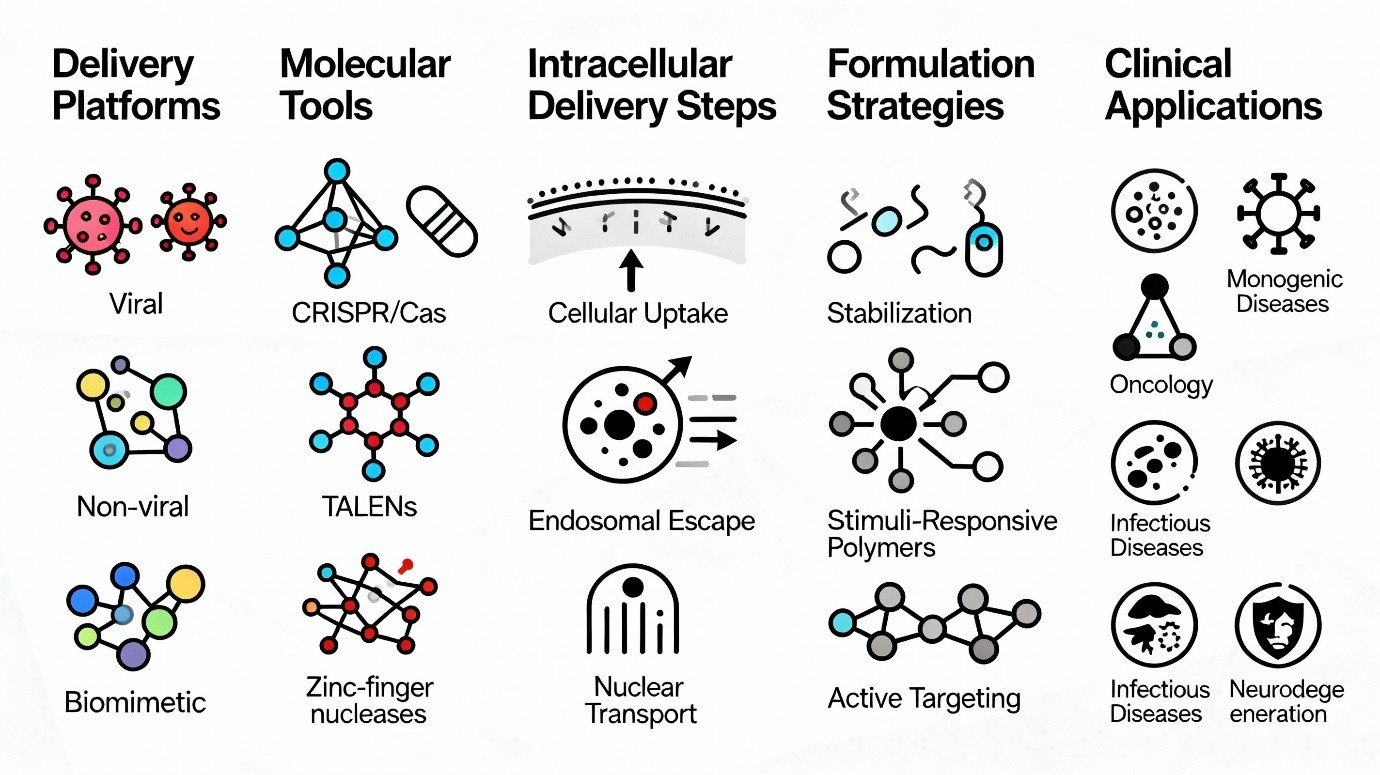
Gene-editing therapeutics, powered by transformative molecular tools such as CRISPR/Cas, TALENs, and zinc-finger nucleases, offer unprecedented precision in treating genetic and acquired diseases. Successful clinical translation is profoundly dependent on efficient, safe, and targeted delivery vectors that navigate biological barriers to deliver gene-editing machinery intracellularly while minimizing off-target effects and immunogenicity. This review discusses viral, non-viral, and hybrid biomimetic delivery platforms—highlighting their mechanisms of cellular uptake, intracellular trafficking, and controlled release—for enhanced gene-editing efficiency and safety. It explores advanced formulation strategies incorporating stabilization, stimuli-responsiveness, and active targeting, alongside pharmacokinetic and biodistribution considerations. Clinical applications span monogenic disorders, oncology, infectious diseases, and neurodegenerative conditions, demonstrating therapeutic promise. Despite significant challenges including off-target editing, vector immunogenicity, manufacturing reproducibility, and regulatory hurdles, ongoing advances in gene editor design, AI-driven optimization, and personalized medicine forecast a new era in precision gene therapy. Integration of multi-modal therapies and real-time monitoring will further enhance safety and efficacy, establishing gene-editing therapeutics as a cornerstone of modern precision medicine.
References