Phytopharmacology in the Nanotech Era: Connecting Natural Compounds with Pharmaceutical Nanocarriers
DOI:
https://doi.org/10.64062/JPGMB.Vol2.Issue1.5Keywords:
- Phytopharmacology, Bioactive Phytochemicals, Nanocarriers, Lipid Nanoparticles, Polymeric Nanoparticles, Controlled Release, Targeted Delivery, Nanomedicine, Stimuli-Responsive Systems, Biomimetic Nanocarriers, AI-Driven Design, Personalized Medicine, Natural Therapeutics.
Abstract
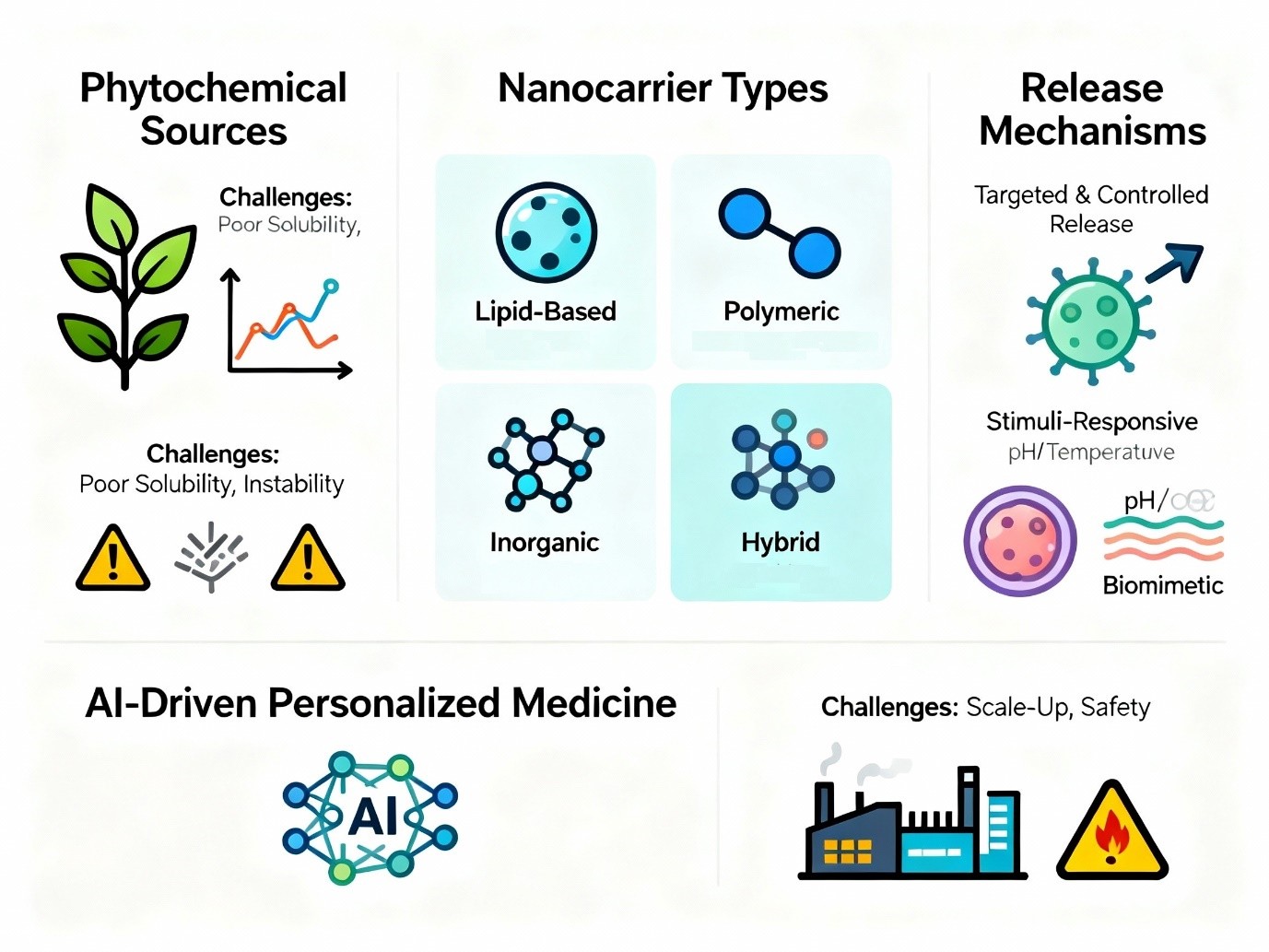
Phytopharmacology explores bioactive compounds derived from plants with diverse therapeutic potentials, including anticancer, neuroprotective, anti-inflammatory, and antimicrobial effects. Despite their promise, many phytochemicals suffer from poor solubility, instability, and suboptimal pharmacokinetics, limiting clinical translation. Nanotechnology-based delivery systems—such as lipid-based, polymeric, inorganic, and hybrid nanocarriers—offer transformative solutions by enhancing solubility, stability, targeted delivery, and controlled release of phytochemicals. These nanocarriers can be engineered for passive and active targeting, enabling improved bioavailability, tissue specificity, and therapeutic efficacy while minimizing off-target effects. Advanced strategies incorporating stimuli-responsive release, biomimetic coatings, and AI-driven design further refine these platforms for personalized medicine. Challenges remain in scale-up, reproducibility, regulatory compliance, and safety, necessitating interdisciplinary collaboration. Continued innovation in nanocarrier formulation promises to bridge traditional plant-based medicines with modern precision therapeutics, offering safer and more effective natural compound-based treatments.
References