Pathophysiological Insights into Parkinson’s Disease Progression
DOI:
https://doi.org/10.64062/JPGMB.Vol1.Issue6.3Keywords:
- Parkinson’s Disease, Dopaminergic Degeneration, Α-Synuclein Aggregation, Neuroinflammation, Neurotoxin Models, Genetic Models, Pre-Formed Fibril Models, Non-Motor Symptoms.
Abstract
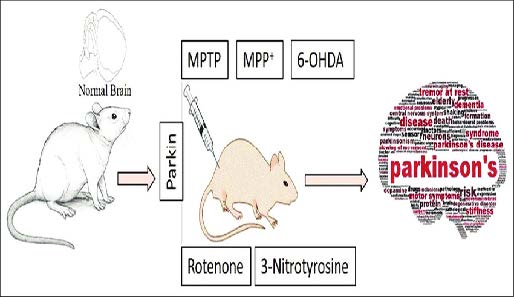
Parkinson disease (PD) is a progressive and multifactorial neurodegenerative disease, which is mainly caused by the selective destruction of dopaminergic neurons in the substantia nigra pars compacta, and causes the typical motor symptom of bradykinesia, resting tremor, rigidity, and postural instability. In addition to these motor defects, PD has a wide range of non-motor symptoms, such as cognitive, mood, sleep, and autonomic deficiency, all of which decrease the quality of life of patients considerably. PD has a complicated pathophysiology comprising genetic predisposition (e.g., SNCA, LRRK2, PARK gene mutations), environmentally triggered, mitochondrial dysfunction, oxidative stress, chronic neuroinflammation, and aggregation and prion-like propagation of α-synuclein. Neurotoxin-induced, genetic, and α-synuclein pre-formed fibril (PFF) systems have proven essential in the understanding of these mechanisms and as a result of the knowledge led to an understanding of the loss of dopaminergic neurons, misfolding of α-synuclein, glial-mediated neuroinflammation, and both motor and non-motor symptoms. Moreover, the models provide critical platforms on preclinical analysis of therapeutic interventions, such as antioxidant therapies, anti-aggregates, immunomodulatory therapies, and those that promote non-motor symptoms and thus improved clinical outcomes and development of holistic disease-modifying interventions.
References