The Pharmacogenetics of Opioid Metabolism: A Clinical Perspective
DOI:
https://doi.org/10.64062/JPGMB.Vol1.Issue4.16Keywords:
- Pharmacogenetics, Opioid Metabolism, CYP450 Enzymes, ABCB1 Transporter, Animal Models, Veterinary Pharmacology
Abstract
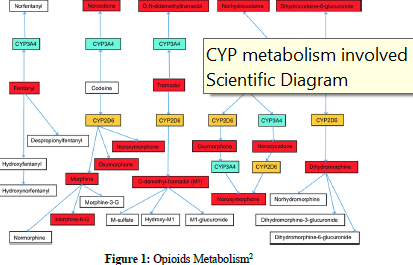
The given review provides an extensive overview of the pharmacogenetics of opioid metabolism as viewed through the prism of animal-based clinical studies, focusing on genetic variability as the fundamental aspect of drug response modulation. By taking an approach of synthesizing findings of rodent and canine, the paper aims at focusing on crucial metabolic enzymes of CYP2D, CYP3A, and UGT1A/2B, and membrane transporter ABCB1 (P-glycoprotein) in order to understand how naturally existing or induced experimentally genetic polymorphisms interact with opioid biotransformation, analgesic efficacy, and adverse effect profile. As an example, the variations in CYP2D isoforms across rat strains have strong implications on codeine-to-morphine conversion, and MDR1-deficient canines exhibit an enhanced sensitivity of the central nervous system towards opioids because of poor efflux capability. Such learnings are incredibly significant, not only to veterinary medicine itself, as a way to dose opioids by breed, but also to human drug development, which relies heavily upon animal models in preclinical screening and risk measures. The review also singles out research gaps that are critical such the lack of Genomic databases to animals and limited genetic diversity within experimental populations. It recommends that more cross-species studies need to be done, and multi-omics methods should be integrated and that more humanized animal models need to be generated to increase translation correctness. Finally, the knowledge of pharmacogenetic processes in animals improves different safety, efficacy and species-specific therapeutic approaches to opioid therapy
References