Investigating The Neuroprotective Role of Curcumin in Alzheimer's Disease Models
DOI:
https://doi.org/10.64062/JPGMB.Vol1.Issue4.13Keywords:
- Alzheimer’s disease, Neurodegenerative disease, Curcumin, Polyphenols, Neuroprotection
Abstract
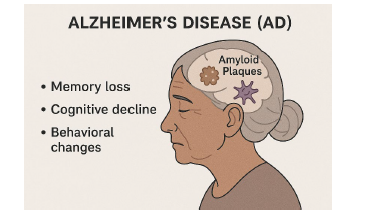
Alzheimer disease (AD) is a pathological worsening process of neurodegenerative disease characterised by impaired thinking, memory and behavioural problems, which have a considerable health impact worldwide. There is no disease-altering treatment at the present day that can help limit the progression of the disease, which is why there is the strong necessity to develop a disease-modifying medication. Natural therapeutic explores in curcumin A polyphenolic compound, curcumin found in Curcuma longa (turmeric) has gained a lot of interests to potential natural therapeutic agent because of its powerful antioxidant, anti-inflammatory, anti-amyloid and chelation towards metals. This review provides a comprehensive study on the neuroprotective effects of curcumin in the case of Alzheimer disease, its biochemical and pharmacological profile in its application regarding unique chemical content, bioactive compounds of curcumin, and pharmacokinetic constraints, like poor bioavailability. In vitro studies at the preclinical level show that curcumin can limit neurotoxicity caused by amyloid beta, prevent the formation of aggregates, and limit oxidative and inflammatory injuries and in vivo-based rodent trials report both cognitive and behavioural enhancements as well as the decrease of amyloid plaque and hyperphosphorylation of tau proteins. However, several limitations like low bioavailability, absence of large-scale, clinical trials, and insufficiency of long range safety make clinical implementation poor. The future study is needed to create a nano formulation, which will improve its bioavailability and combination therapies, which will produce a synergistic neuroprotective effect. In general, curcumin has a large potential as effective safe multi-targeted therapy against Alzheimer disease and its relevance should be further investigated due to conducting well-conducted human trials that may determine its effectiveness.
References