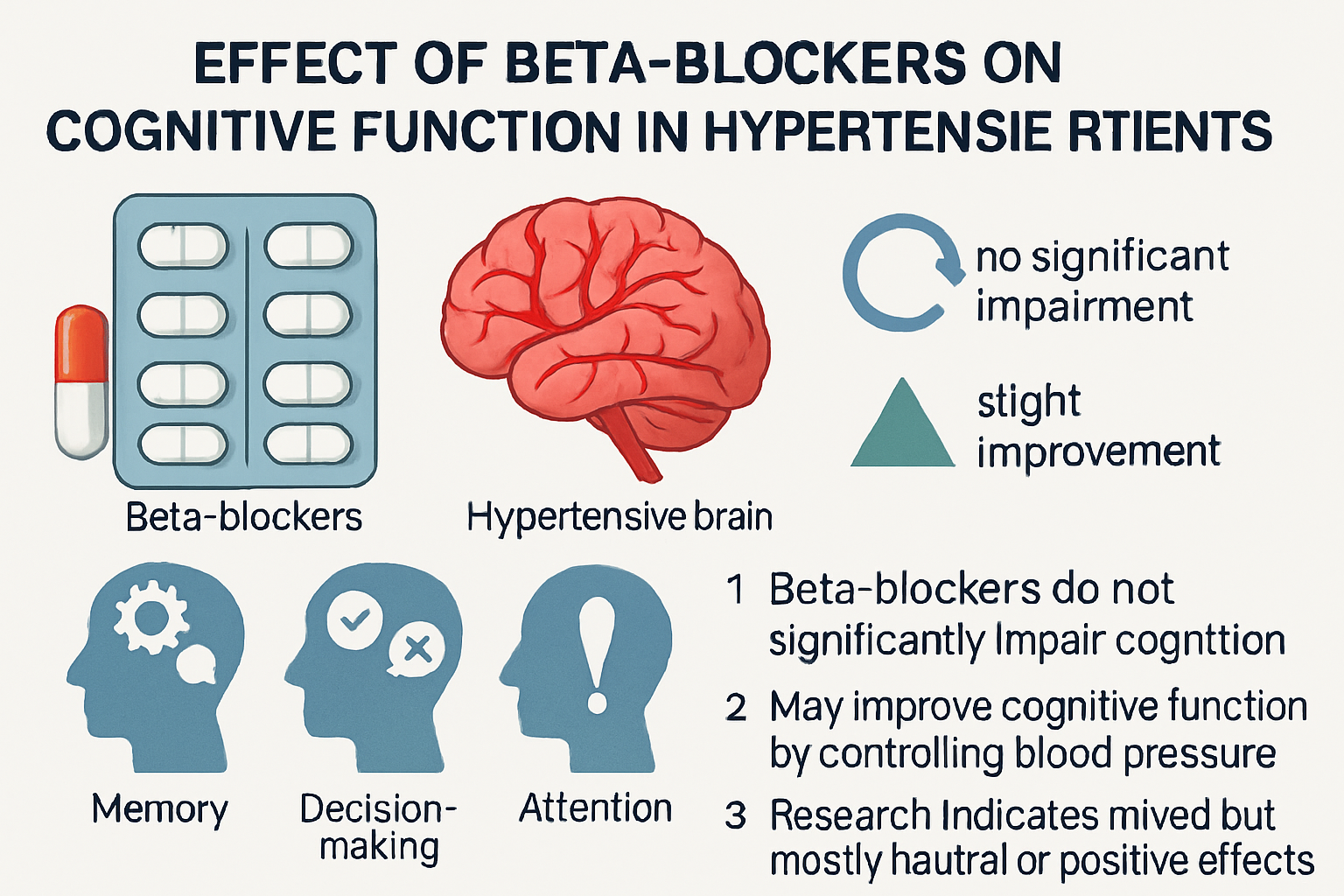
Effect of Beta-Blockers on Cognitive Function in Hypertensive Patients
DOI:
https://doi.org/10.64062/JPGMB.Vol1.Issue4.1Keywords:
- Hypertension, Beta-blockers, Cognitive function, MMSE, MoCA, Antihypertensive drugs, Cognitive impairment, Elderly patients
Abstract
Hypertension is a major health problem around the world. It is commonly treated with long-term medications, such as beta-blockers. They are good in lowering blood pressure, but there are worries about how they can affect cognitive function, especially in older people. The goal of this study was to find out how beta-blockers affect cognitive performance in people with high blood pressure by comparing them to people who take other blood pressure drugs. This research used a cross-sectional, comparative design with 100 people with high blood pressure between the ages of 45 and 75. They were split evenly into two groups: those who used beta-blockers and those who did not. The Mini-Mental State Examination (MMSE) and the Montreal Cognitive Assessment (MoCA) were used to test cognitive abilities. The results showed that patients on beta-blockers had far lower cognitive scores and a higher rate of mild to moderate cognitive impairment than the control group. Statistical analysis showed that these differences were significant (p < 0.05). The study's conclusion is that beta-blocker therapy may make cognitive performance worse in people with high blood pressure. This shows how important it is to be careful when prescribing these drugs and to keep an eye on cognitive function in these individuals.
References