Bioactive Phytochemicals as Epigenetic Modulators in Cancer Therapy: Mechanisms, Therapeutic Potential, and Clinical Prospects
DOI:
https://doi.org/10.64062/Keywords:
- Epigenetics; DNA methylation; histone deacetylase; phytochemicals; EGCG; curcumin; sulforaphane; resveratrol; cancer chemoprevention
Abstract
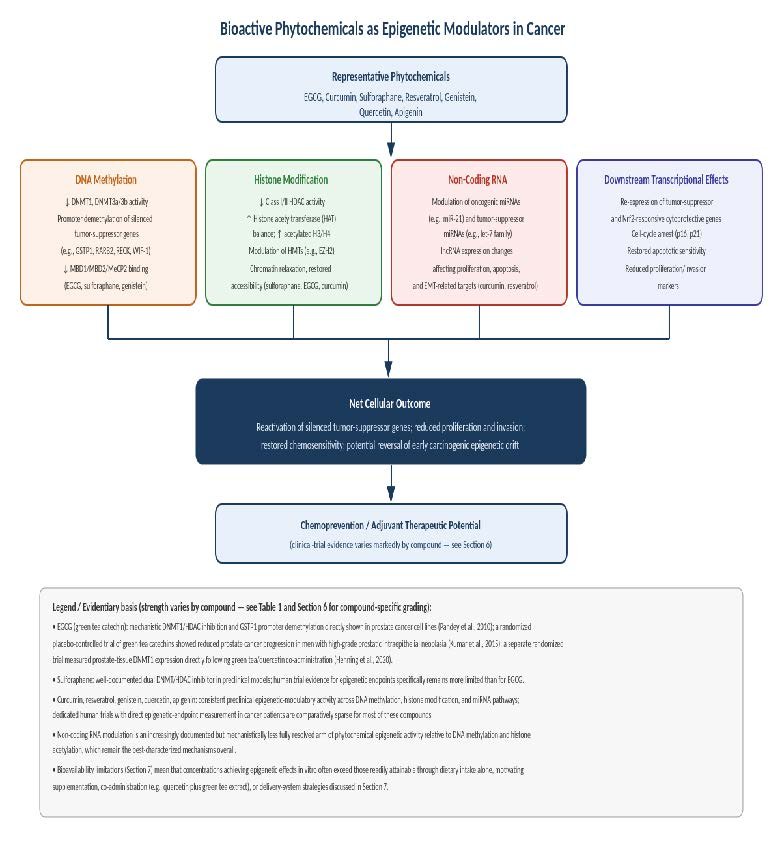
Background: Epigenetic dysregulation encompassing aberrant DNA methylation, altered histone modification, and dysregulated non-coding RNA expression is now recognized as a hallmark of carcinogenesis that is mechanistically distinct from, but functionally intertwined with, genetic mutation. Because epigenetic marks are inherently reversible, they represent an attractive therapeutic target, and a growing body of evidence indicates that dietary and medicinal-plant-derived bioactive phytochemicals can modulate the key enzymatic machinery governing these marks. Objective: To synthesize current mechanistic and clinical evidence on bioactive phytochemicals as modulators of DNA methyltransferases (DNMTs), histone-modifying enzymes (HDACs, HATs, HMTs), and cancer-relevant non-coding RNAs; to critically grade the strength of evidence across major compound classes; and to outline translational and clinical research priorities. Methods: A structured, non-systematic literature search of PubMed, Scopus, and Google Scholar (inception–June 2026) was conducted using combinations of compound-, mechanism-, and condition-specific search terms, detailed in Section 2, with an explicit three-tier evidence-grading framework applied to each major compound class. Results: Green tea catechins (notably epigallocatechin-3-gallate [EGCG]), sulforaphane, curcumin, resveratrol, and dietary flavonoids (genistein, quercetin, apigenin) each demonstrate consistent, mechanistically well-characterized DNMT- and/or HDAC-inhibitory activity in preclinical models, frequently accompanied by promoter demethylation and re-expression of silenced tumor-suppressor genes (e.g., GSTP1, RARB2, RECK, WIF-1). Direct human evidence is most developed for green tea catechins, including a randomized placebo-controlled trial demonstrating reduced prostate cancer progression and a separate randomized trial directly measuring prostate-tissue DNMT1 expression following intervention; comparable dedicated human trials with direct epigenetic endpoints remain limited for most other compound classes reviewed. Conclusion: Bioactive phytochemicals represent a mechanistically well-supported, generally low-toxicity class of candidate epigenetic modulators with plausible chemopreventive and adjuvant therapeutic value in cancer. Clinical translation, however, remains compound-specific and comparatively early-stage; bioavailability limitations, the paucity of trials with direct epigenetic-endpoint measurement, and the need for combination-therapy and delivery-system optimization are identified as priority areas for future research.
References