Natural Products Targeting Insulin Resistance and β-Cell Dysfunction in Type 2 Diabetes Mellitus: From Molecular Mechanisms to Clinical Translation
DOI:
https://doi.org/10.64062/Keywords:
- insulin resistance; β-cell dysfunction; type 2 diabetes mellitus; natural products; berberine; curcumin; resveratrol; AMPK; PI3K/Akt; Nrf2
Abstract
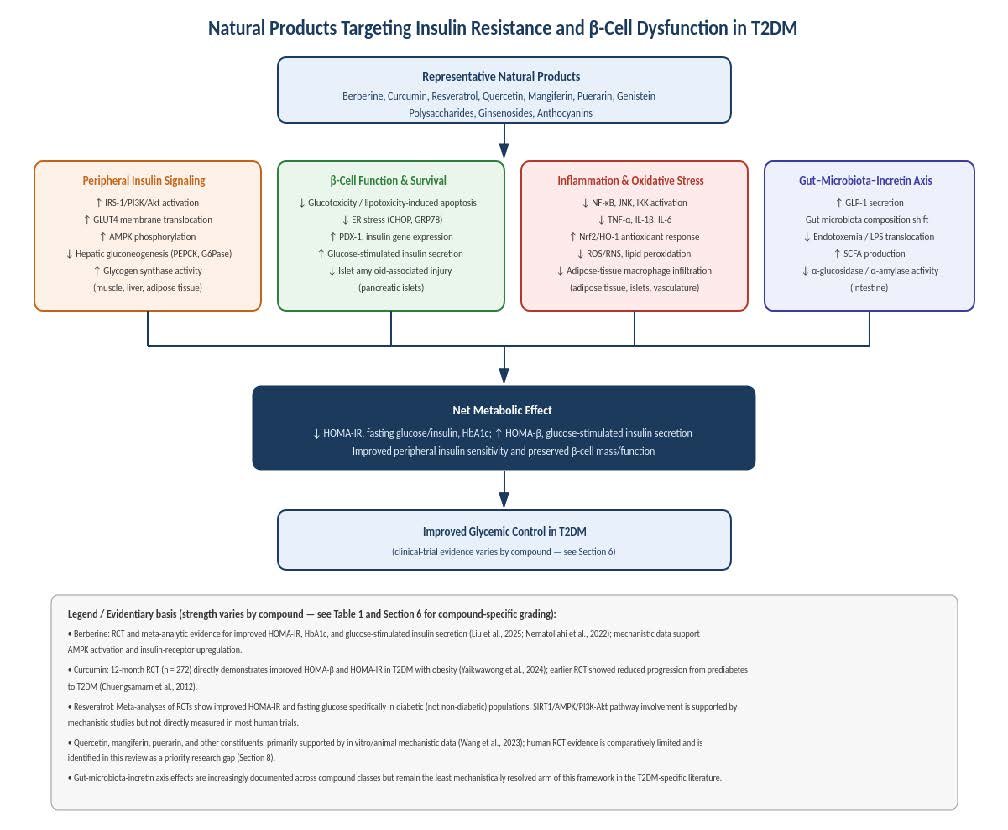
Background: Type 2 diabetes mellitus (T2DM) arises from the interaction of peripheral insulin resistance and progressive pancreatic β-cell dysfunction, both driven by overlapping mechanisms of glucotoxicity, lipotoxicity, chronic low-grade inflammation, oxidative stress, and endoplasmic-reticulum (ER) stress. Conventional pharmacotherapy, while effective, is limited by adherence, cost, and adverse-effect burden, sustaining strong scientific and clinical interest in natural products as adjunctive or complementary therapeutic agents. Objective: To synthesize current evidence on natural products acting on insulin resistance and β-cell dysfunction in T2DM, map their molecular mechanisms onto the signaling pathways that govern these two processes, critically grade the strength of pre-clinical versus clinical evidence for major compound classes, and outline priorities for clinical translation. Methods: A structured, non-systematic literature search of PubMed, Scopus, Web of Science, and Google Scholar (inception–June 2026) was conducted using combinations of compound-, condition-, and mechanism-specific search terms, detailed in Section 2. Results: Berberine, curcumin, and resveratrol possess the most substantial clinical-trial evidence base, with randomized controlled trials and meta-analyses demonstrating reductions in HOMA-IR, fasting glucose, and glycated hemoglobin (HbA1c), and, for curcumin specifically, direct evidence of improved β-cell function (HOMA-β) in a 12-month trial. Quercetin, mangiferin, puerarin, genistein, and related flavonoids/polyphenols show consistent mechanistic activity via AMPK, PI3K/Akt, Nrf2/HO-1, and NF-κB pathways in vitro and in animal models, but comparatively limited human trial data. A gut-microbiota–incretin axis, involving glucagon-like peptide-1 (GLP-1) secretion and short-chain fatty acid production, is increasingly implicated as a shared mechanism across compound classes. Conclusion: Natural products offer a mechanistically diverse, multi-target approach to insulin resistance and β-cell preservation in T2DM. Clinical translation is most advanced for berberine and curcumin; for most other compounds, standardized extract development, dose-ranging pharmacokinetic studies, and adequately powered clinical trials with direct β-cell functional endpoints (HOMA-β, disposition index) remain priority needs.
References